New Year’s Resolutions for Your Car: Why Preventive Maintenance Saves You Money
January is the time of year when many people reset. We set goals, tighten budgets, and look for smarter ways to take care of the things that matter most. One resolution that often gets overlooked is vehicle maintenance, even though it can have a bigger financial impact than most people realize.
At Van Wyk Auto, we see the results of delayed maintenance every day. Services that could have been handled on a predictable schedule often turn into major repairs simply because they were postponed. Preventive maintenance is one of the easiest resolutions to keep, and one of the most effective ways to control long-term vehicle costs.
What Preventive Maintenance Really Means
Preventive maintenance is not just inspections or testing. It is service performed based on time, mileage, and need before problems arise in order to keep vehicle systems operating as designed.
This includes oil changes, tire rotations, fluid exchanges, cooling system services, brake service, and other manufacturer-recommended maintenance intervals. Components like brake pads and rotors, fluids, filters, and timing components are designed to wear gradually and be serviced before they cause significant damage to other parts.
When maintenance is performed on schedule, wear stays controlled. When it is delayed, that wear spreads to more expensive components.
Maintenance vs Repairs: The Cost Difference
Preventive maintenance is planned and predictable. Repairs are reactive and often expensive.
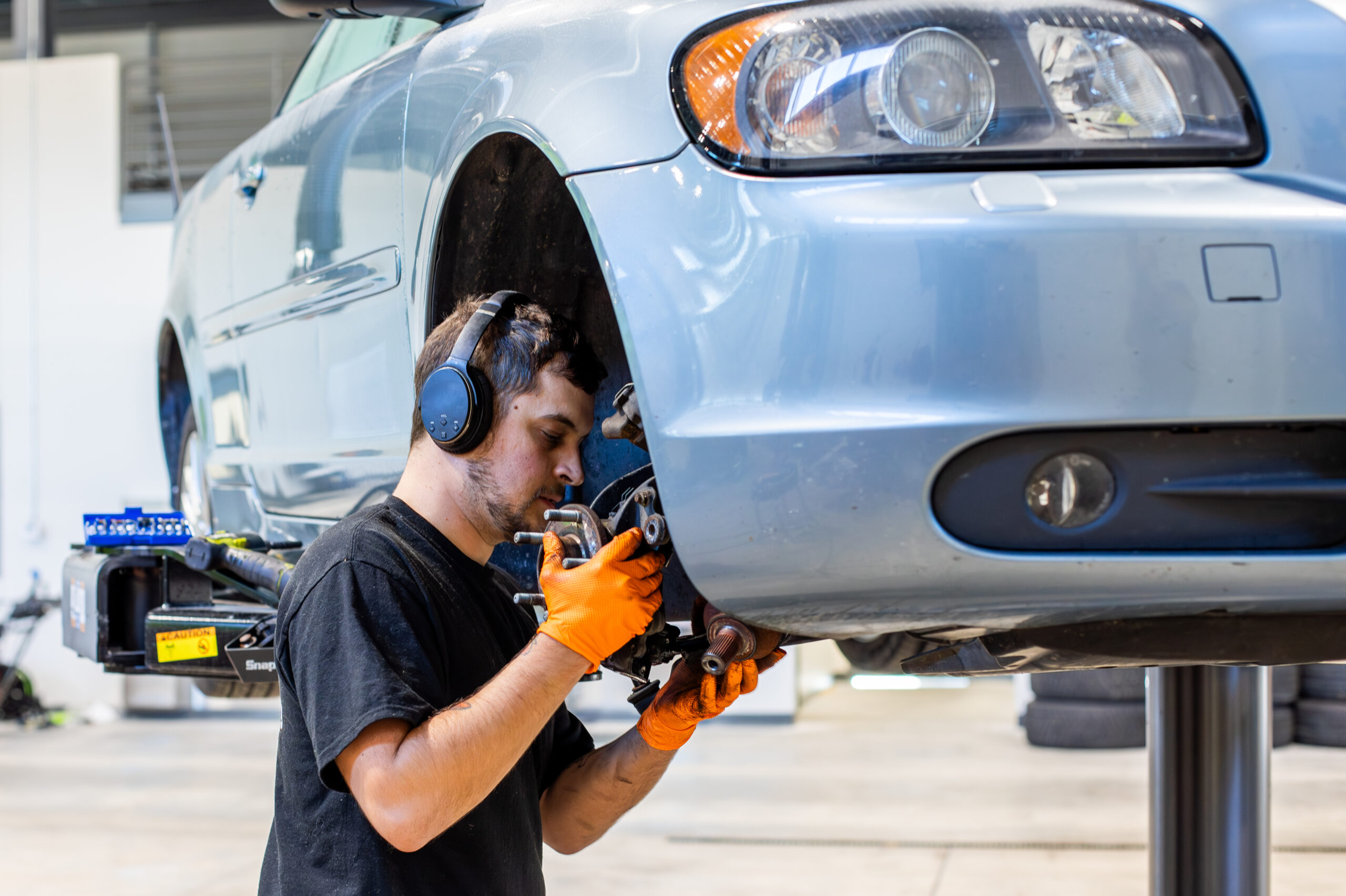
A good example is brake service. Replacing brake pads and rotors at the proper time helps protect the calipers. When pads are run too long, excessive heat and wear can damage the calipers, which are significantly more expensive than pads and rotors alone.
Once calipers fail, pads and rotors still need to be replaced, but now the repair includes additional parts and labor that could have been avoided. What started as routine maintenance turns into a much larger repair simply because service was delayed.
The same pattern applies to fluids, suspension components, and engine systems. Suspension that is performing properly keeps your tires wearing evenly. Once suspension components fail, you’ll have uneven wear and tear on those 70,000 mile tires, whether you’ve had them for 5,000 miles or 60,000 miles. That means you’ll need suspension repairs and a new set of tires, instead of just maintaining the suspension. Addressing wear early keeps costs lower. Waiting until failure almost always multiplies the expense. In fact, studies have shown that repairs typically cost TWELVE TIMES more than scheduled maintenance costs.
Why January Is the Right Time to Focus on Maintenance
Winter is one of the toughest seasons for vehicles in Wisconsin. Cold temperatures stress batteries, thicken fluids, and expose weaknesses in braking, steering, and cooling systems. Road salt accelerates corrosion and wear, especially on brake components and undercarriage parts.
January is also when many people plan their budgets for the year ahead. Scheduling maintenance based on mileage and manufacturer recommendations allows costs to be spread out instead of arriving all at once as an unexpected repair.
Preventive maintenance turns vehicle ownership into something you can plan for instead of react to.
Oil Changes Are Maintenance, Not a Quick Task
Oil changes are often treated as a quick errand, but they are one of the most important maintenance services a vehicle receives. Clean oil lubricates internal engine components, reduces heat, and prevents premature wear.
More importantly, oil service is a regular checkpoint for overall vehicle health. When performed by trained mechanics, oil changes include inspections that help identify developing issues early, before they escalate into costly repairs.
Skipping oil changes or choosing the fastest option without proper service increases the risk of engine damage, reduced fuel efficiency, and shortened engine life. Engine repairs are among the most expensive repairs a vehicle can need, and many are preventable.
Preventive Maintenance Protects Long-Term Vehicle Value
For drivers who plan to keep their vehicles long-term, maintenance is an investment. Vehicles that receive routine service last longer, perform better, and cost less to own over time.
Even for those who may sell or trade in a vehicle later, documented maintenance history improves resale value and buyer confidence. A vehicle that has received consistent service is far more attractive than one that needs immediate repairs.
Deferred maintenance often reduces value and forces repairs before a sale can happen.
A Simple Resolution That Pays Off All Year
New Year’s resolutions do not need to be complicated to be effective. Committing to time- and mileage-based vehicle maintenance is one of the simplest ways to reduce stress, avoid unexpected expenses, and extend the life of your car or truck.
Routine services like oil changes, tire rotations, brake service, and fluid exchanges help prevent larger, more expensive repairs down the road. Addressing wear early keeps maintenance manageable and ownership predictable.
As the year begins, consider making preventive maintenance a priority. It is a resolution that pays off every mile you drive.